
Process Art Without Paint: Four Creative Activities to Try
Process art is all about the experience of creating, rather than focusing on the finished product. In our last post, we shared some of our favorite ways to explore process art using paint. But did you know that you don’t need paint to encourage creativity? There are plenty of ways to explore, experiment, and create without opening a single bottle of paint! Here are four of our favorite process art activities that you can try at home.
Loose Parts Creation
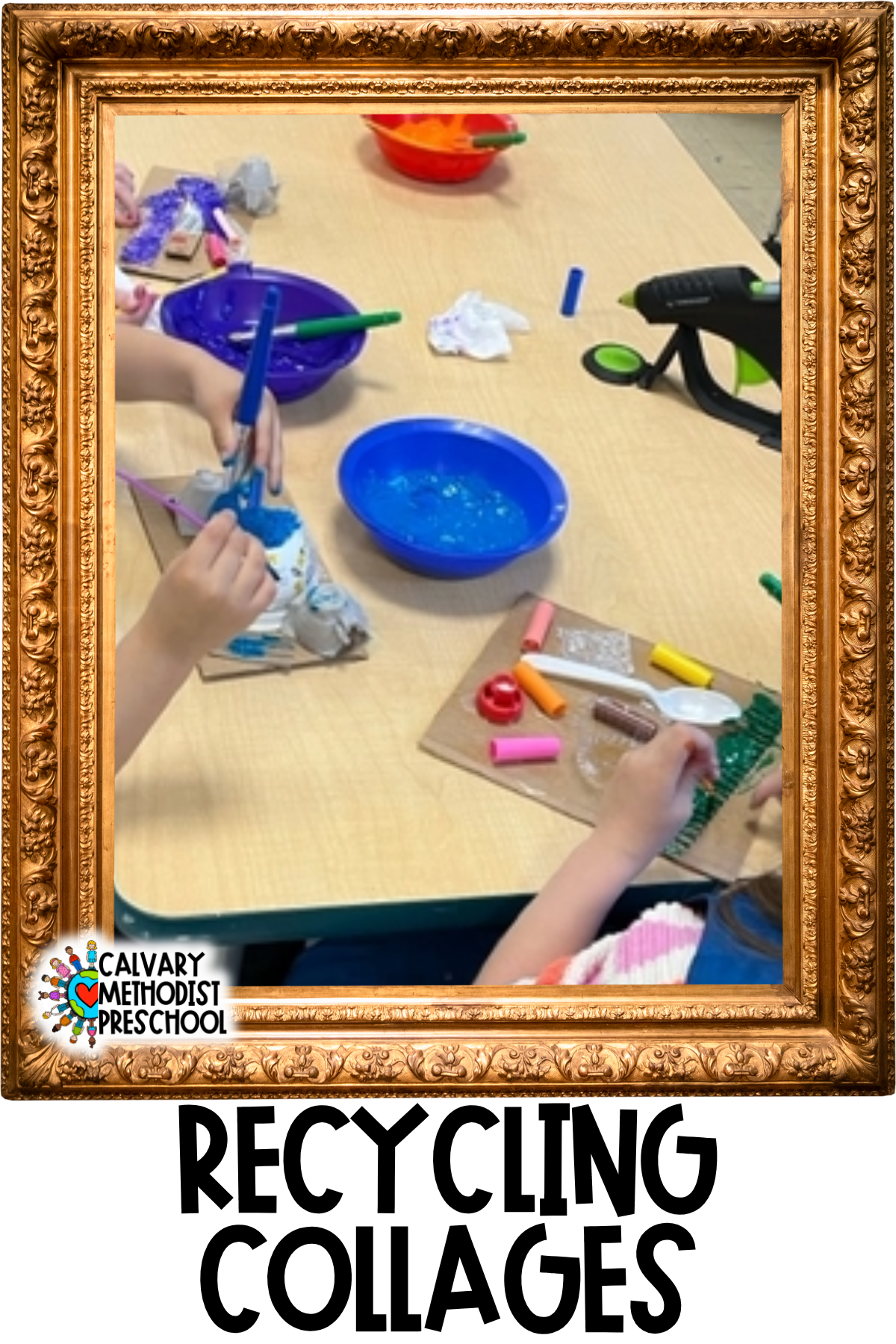
Loose parts process art is easy to set up and gives children the chance to explore different textures while creating unique pieces of artwork. Loose parts can be just about anything! You can collect items from nature, such as rocks, leaves, small sticks, pinecones, or flowers. You can also use items from the recycling bin, like cardboard, fruit cups, or pouch tops, or traditional craft supplies, such as sequins, buttons, pieces of ribbon, or stickers.
If you’ve made colorful artwork using some of the activities from our recent Process Art with Paint post, you can even cut that paper into shapes to add more color to your creations.
You’ll need a sturdy piece of paper—or, even better, a piece of cardboard—to glue the loose parts onto. Then, let your child take the lead! If you have the space, leave the supplies out so your child can return to the project whenever inspiration strikes
Sticky Art
Sticky art requires a little more setup, but it can be lots of fun! For this activity, I recommend using contact paper, although clear packing tape can also work.
The simplest way to set up sticky art is to tape contact paper to the top of a table with the sticky side facing up. Then, gather loose parts just as you would for a loose parts creation activity and invite your child to see what they can make. They can arrange, rearrange, and experiment with different materials to create their own designs.
You can also attach the contact paper to a vertical surface, such as a window or wall. This adds another challenge because children have to experiment with what will and won’t stick when gravity is working against them!
If you’re working near a window, you can also introduce the concept of opacity. Which materials can you see through? Which ones block the light? What happens when you layer different materials on top of one another? It’s a simple way to combine art, exploration, and early science learning.
Safety Note: For both Loose Parts and Sticky Art, be sure to choose age-appropriate materials and supervise closely, especially when using small items that could pose a choking hazard.
Free Art
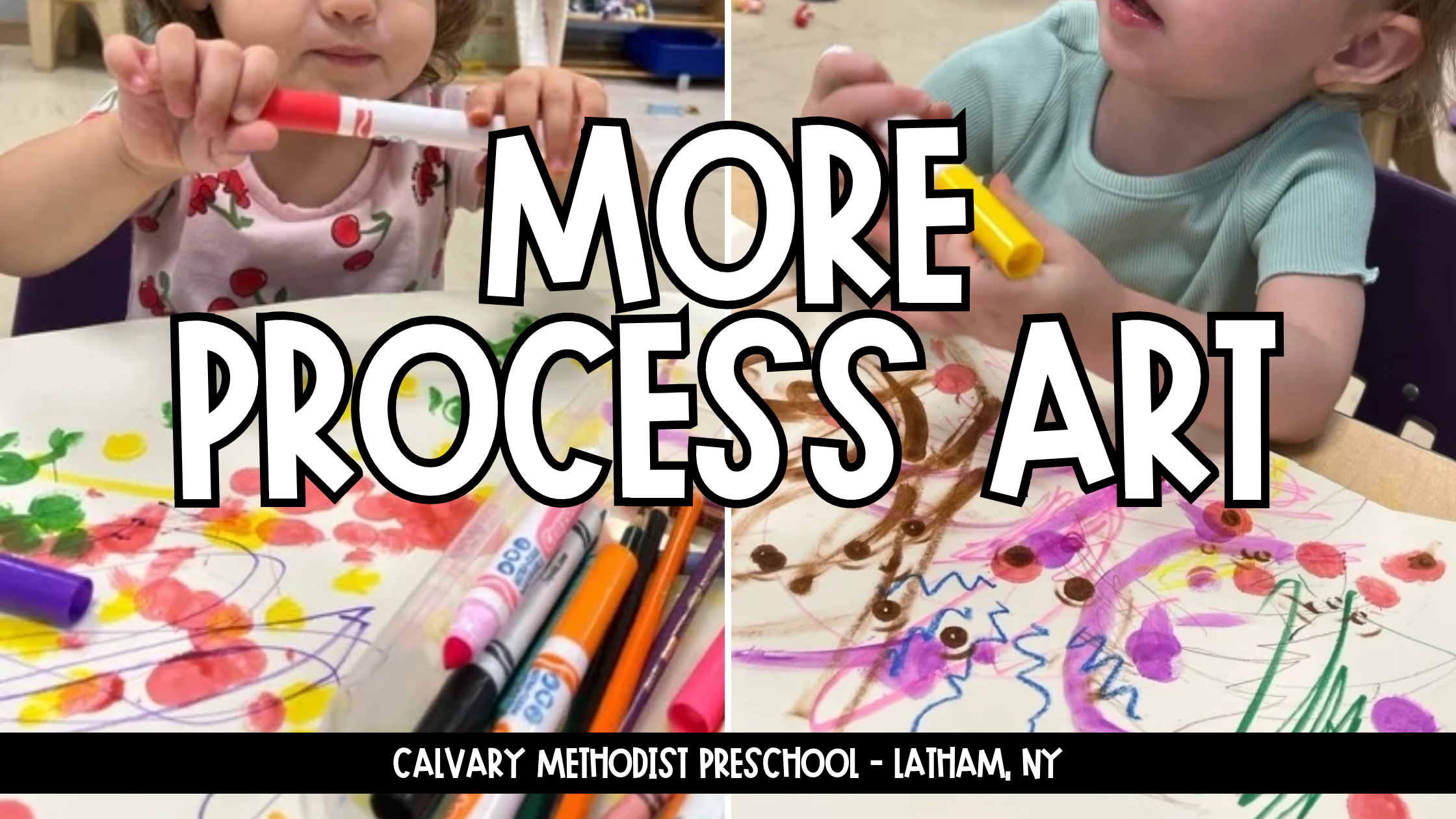
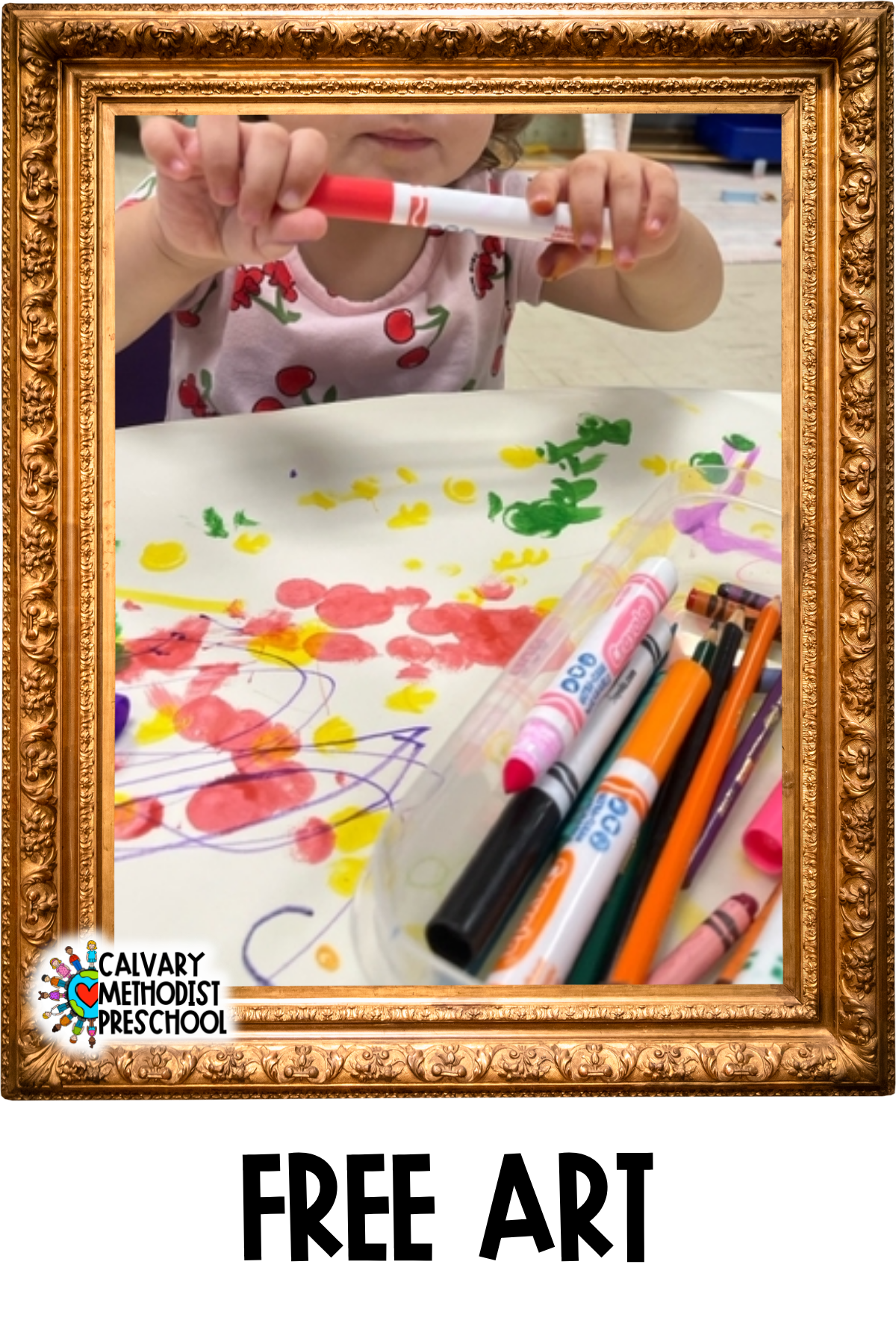
Looking to encourage creativity without creating a big mess? Try providing a large piece of paper and a variety of coloring tools. At Calvary Methodist Preschool, we love Bingo dabbers and Kwik Stix. However, a mix of crayons, colored pencils, and markers works just as well. Children often find the variety of tools especially intriguing because each one creates a different effect.
When you give your child a blank piece of paper and the freedom to create, you may be surprised by what they come up with! There’s no example to copy and no finished product to match—just an opportunity to explore and make something uniquely their own.
There are several ways to change up this activity, too. Have a really big cardboard box from a recent delivery? Let your child climb inside with some coloring tools and decorate the inside of the box. This is an activity they’ll likely return to over and over again!
Looking for a great gross motor challenge? Tape a large piece of paper to the underside of a low table. Then, have your child lie on their back and color overhead, just like Michelangelo while painting the Sistine Chapel ceiling! This is a fun way to combine creativity with movement.
Scribble Art
Have you ever told a child not to scribble? For this process art activity, scribbling isn’t just encouraged—it’s the goal!
With scribble art, encourage your child to create without lifting their crayon or marker from the paper. You can add a button or a gem to the page and challenge them to draw a continuous line around it. Or, turn on some music and invite them to scribble what they think the music sounds like. Does the music feel fast or slow? Does it sound soft and gentle or loud and energetic? See how they use lines and movements to express what they hear.
There’s no right or wrong way to scribble. The goal is to experiment, follow their ideas, and enjoy the freedom of creating.
The Best Part Is the Process
Process art doesn’t require fancy supplies, expensive materials, or a perfectly planned project. Sometimes, the simplest activities offer the best opportunities for creativity and discovery. By giving children the freedom to explore different materials, try new ideas, and make their own choices, you’re helping them build confidence in their creativity.
So gather a few supplies, make some space to create, and let your child take the lead. Remember, the goal isn’t to make a perfect picture or create something worthy of the refrigerator door. It’s to enjoy the experience, explore new possibilities, and discover what happens when creativity has room to grow!